

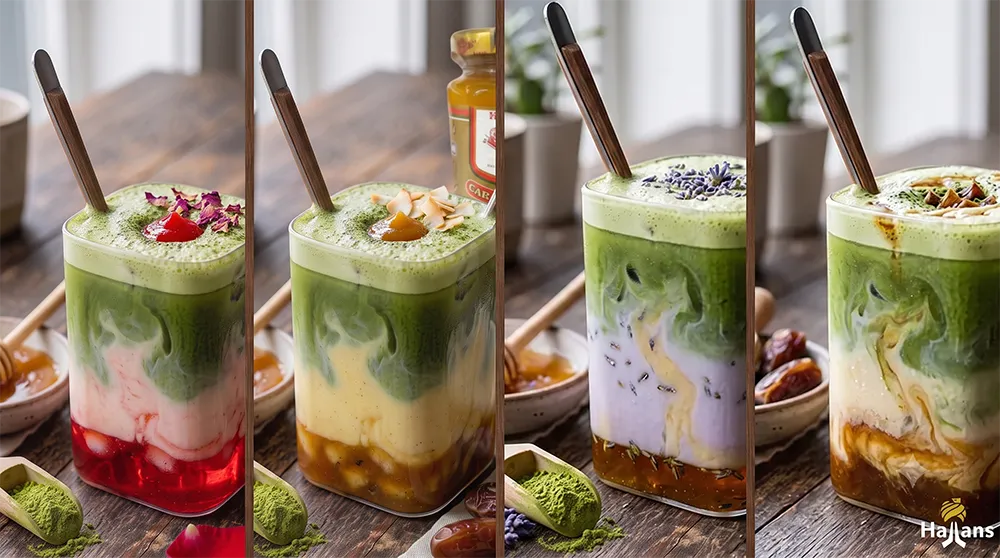
Matcha’s popularity across Britain continues to surge. By 2026 the matcha latte ranks among the country’s ten most-ordered café drinks, with sales of matcha beverages more than doubling in peak months. High-street chains from Costa and Caffè Nero to Blank Street and specialist spots in London, Glasgow and Edinburgh now treat it as a permanent menu staple, while supermarket sachets and ready-to-drink cartons make it easy to enjoy at home.
Date Matcha
Date Matcha has become a quiet favourite among UK café-goers and home cooks looking for a naturally sweetened green tea treat.
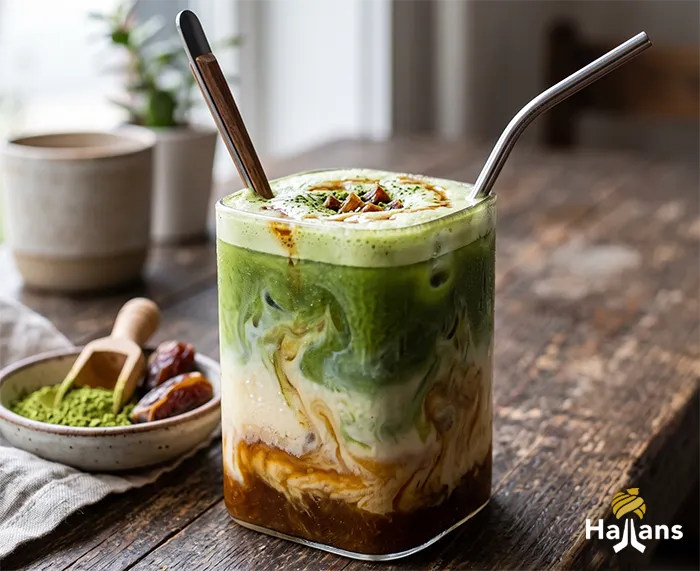
Health benefits help explain the appeal. Because the whole leaf is consumed, matcha delivers a concentrated dose of antioxidants, particularly the catechin EGCG. It also provides a gentle lift of caffeine balanced by L-theanine, which promotes calm focus rather than a sharp spike. Regular drinkers often report steady energy and a sense of wellbeing.
Current trends favour creative combinations. Iced oat-milk lattes remain the everyday choice, frequently flavoured with vanilla, strawberry, blueberry or banana bread. Seasonal specials such as maple-hazel, cherry-vanilla and ube appear regularly, while experimental cafés layer black sesame, coconut foam or chai spices. Functional blends with mushrooms or collagen are also rising.
Quick Date Matcha Latte Recipe
Whisk 1 teaspoon ceremonial-grade matcha with 30 ml hot water until smooth. Blend or stir in 2 soft Medjool dates (pitted) and 200 ml oat milk. Serve iced or gently warmed. The dates lend natural caramel sweetness that softens matcha’s earthiness without refined sugar. Ready in under five minutes, it is an easy, Instagram-friendly drink that captures today’s British matcha mood.
Lavender Honey Matcha
Lavender Honey Matcha offers a delicate floral twist on the classic green tea powder that has taken British cafés by storm.
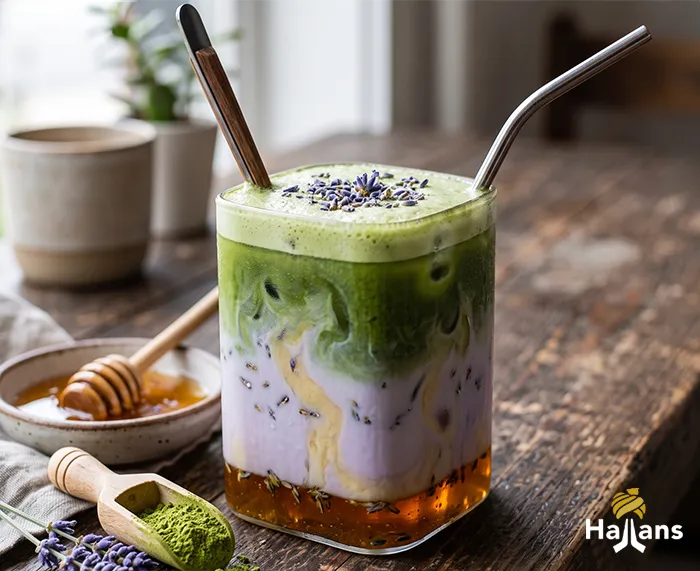
Health benefits remain a key draw. Matcha supplies a concentrated dose of antioxidants, especially EGCG, along with caffeine tempered by L-theanine for calm, sustained focus. Honey contributes natural antibacterial properties and a milder sweetness than refined sugar, while lavender is traditionally linked to relaxation—making the drink a popular choice for those seeking both energy and a moment of calm.
Current trends favour creative, sensory combinations. Iced oat-milk lattes still dominate, frequently flavoured with vanilla, strawberry or banana bread, yet floral and honey-based variations are rising. Seasonal specials, cold foams and ready-to-mix powders now routinely explore lavender, rose or honey notes alongside more adventurous pairings such as ube or black sesame.
Quick Lavender Honey Matcha
Whisk 1 teaspoon ceremonial-grade matcha with 30 ml hot (not boiling) water until smooth and frothy. Stir in 1 teaspoon lavender honey (or mild honey infused with a pinch of culinary lavender) and top with 200 ml steamed or cold oat milk. Serve hot or over ice. The result is silky, lightly floral and ready in minutes—an elegant, modern take on Britain’s favourite green tea.
Sri Kaya Matcha
Sri Kaya Matcha blends Japanese green tea powder with the rich, coconutty sweetness of Southeast Asian (Malaysian) kaya jam, creating a creamy, aromatic fusion that has found a growing niche among experimental café drinkers and home enthusiasts.
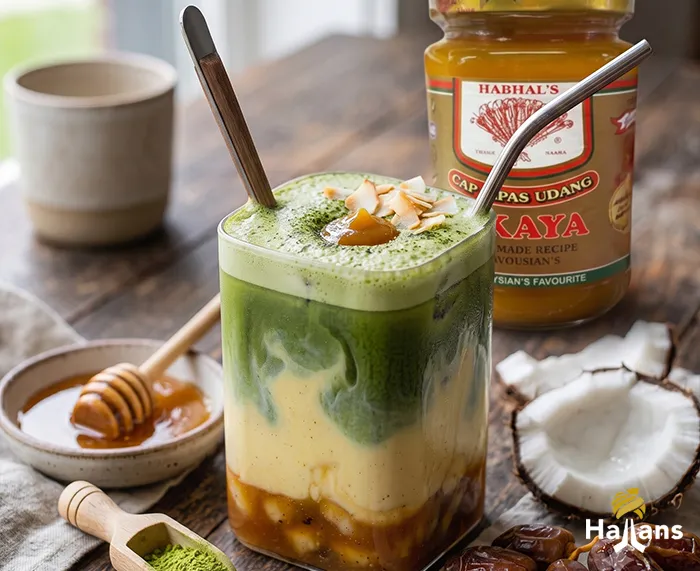
Health benefits centre on matcha’s well-known strengths. The powdered leaves deliver a high concentration of antioxidants, particularly EGCG, alongside caffeine balanced by L-theanine for steady focus rather than jitters. Kaya contributes coconut milk’s natural fats and a touch of pandan aroma, though its traditional sweetness means the drink is best enjoyed as an occasional treat rather than a daily staple. Together they offer a satisfying alternative to more conventional sweetened lattes.
Current trends in matcha combinations lean heavily towards creamy, dessert-inspired and cross-cultural pairings. While iced oat-milk versions with vanilla, strawberry or banana bread remain mainstream favourites, more adventurous menus now explore Southeast Asian influences—ube, coconut foam, pandan and kaya among them. Sri Kaya Matcha fits neatly into this wave of inventive, Instagram-ready drinks that marry umami green tea with tropical richness.
Quick Sri Kaya Matcha
Whisk 1 teaspoon ceremonial-grade matcha with 30 ml hot water until smooth. Warm 2 tablespoons sri kaya jam with 150 ml oat or coconut milk until combined, then pour over the matcha. Stir gently and serve hot or over ice. Optional: a light foam of coconut milk on top. Ready in under five minutes, it delivers a silky, fragrant cup that captures the spirit of today’s most creative matcha experiments.
Suggested Products: KTC Coconut Milk, Maggi Coconut Milk Powder,
Rooh Afza Matcha
Rooh Afza Matcha pairs the earthy depth of Japanese green tea powder with the fragrant, rose-scented sweetness of the classic South Asian syrup, creating a vibrant pink-tinged fusion that feels both refreshing and indulgent.
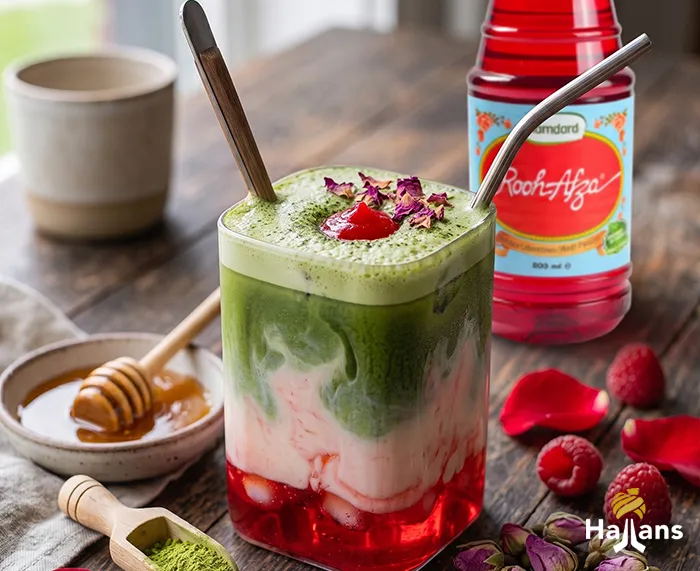
Health benefits rest primarily with the matcha. The finely ground leaves provide a concentrated source of antioxidants, notably EGCG, along with a moderate caffeine lift tempered by L-theanine for calm, sustained energy. Rooh Afza contributes floral notes from rose and a blend of traditional herbs and fruits traditionally associated with cooling and digestive comfort, though its high sugar content means the drink is best treated as an occasional pleasure rather than an everyday health tonic.
Current trends in matcha combinations continue to favour inventive, cross-cultural and sensory pairings. While iced oat-milk lattes with vanilla, strawberry or banana bread remain popular mainstays, cafés and home experimenters increasingly explore floral and aromatic syrups. Rose, lavender and other fragrant additions sit comfortably alongside ube, coconut and honey variations, making Rooh Afza a natural fit for those seeking bold colour and distinctive flavour within the broader matcha boom.
Quick Rooh Afza Matcha
Whisk 1 teaspoon ceremonial-grade matcha with 30 ml hot water until smooth and frothy. Stir in 1–2 teaspoons Rooh Afza syrup, then top with 200 ml cold or lightly warmed oat milk. Serve over ice for a cooling effect, or hot if preferred. A light foam or extra drizzle of syrup finishes the drink. Ready in minutes, it delivers a fragrant, gently sweet cup that captures the playful spirit of today’s most creative matcha experiments.
Banana Custard Matcha
Banana Custard Matcha brings together the vibrant green tea powder with the soft, creamy sweetness of banana and classic custard, resulting in a comforting, dessert-like drink that feels both familiar and inventive.
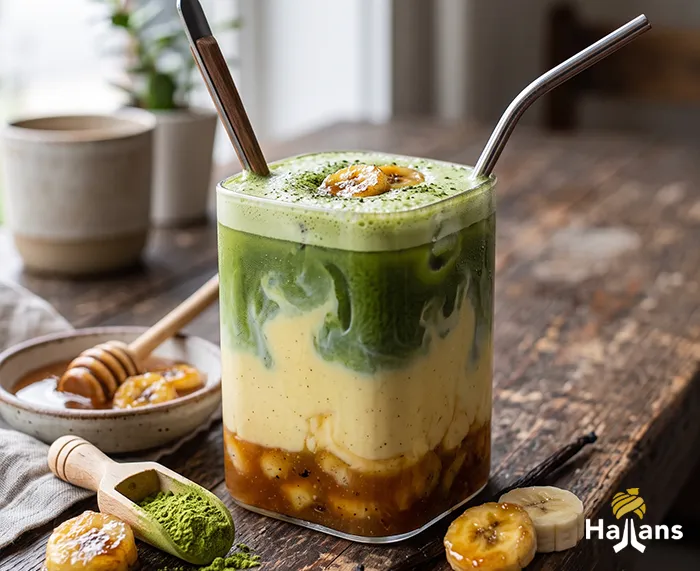
Health benefits are driven largely by the matcha itself. The powdered leaves offer a rich supply of antioxidants, particularly EGCG, plus caffeine moderated by L-theanine for focused energy without the usual crash. Banana contributes potassium and natural fibre, while the custard element adds a silky texture; however, the inherent sweetness means this combination is best enjoyed as an occasional treat rather than a daily health drink.
Current trends in matcha combinations lean strongly towards dessert-inspired and fruit-forward pairings. Iced oat-milk lattes remain the everyday favourite, yet banana bread matcha has already become a high-street and specialist-café staple. Custard-style and creamy banana variations sit comfortably within this wave, joining other popular experiments such as white chocolate, strawberry shortcake and maple-hazel that prioritise comfort and visual appeal.
Quick Banana Custard Matcha
Whisk 1 teaspoon ceremonial-grade matcha with 30 ml hot water until smooth. Blend or mash half a ripe banana with 2 tablespoons ready-made custard (or a spoonful of custard powder mixed with a little milk), then combine with 150–200 ml oat milk. Pour over the matcha, stir well and serve hot or iced. A light dusting of cinnamon or an extra banana slice finishes the drink. Ready in under five minutes, it delivers a creamy, gently sweet cup that captures the playful, dessert-led spirit of today’s most popular matcha creations.